Table of Contents
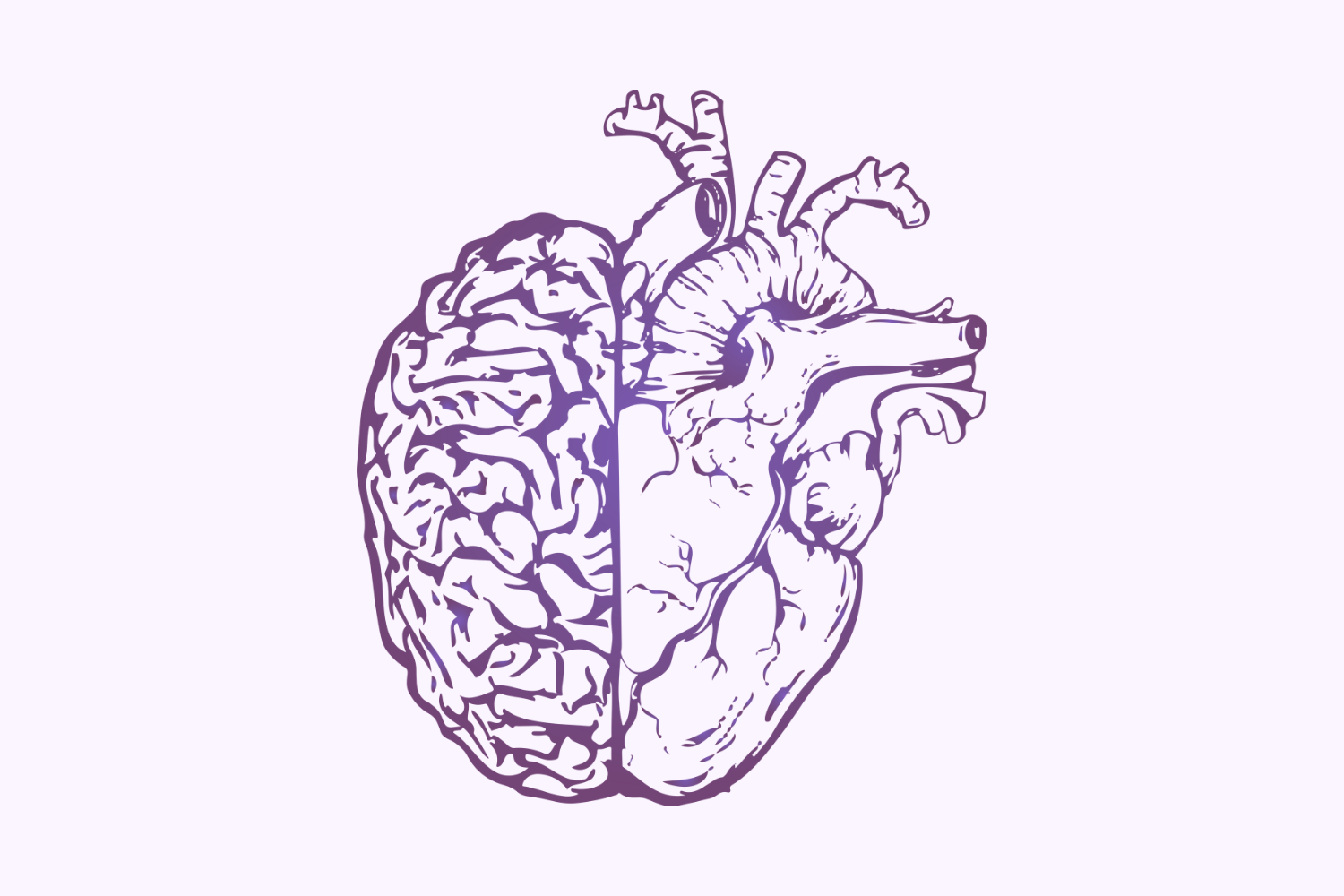
Your heart feels more than you think
It beats faster when you're excited. It constricts when you're scared. And it feels heavy when something weighs on you. Our heart reacts to our emotions – more strongly than many believe.
But: What happens when this emotional pressure doesn't subside? When stress is not a temporary exception, but a permanent state?
Especially during perimenopause, when life changes on several levels – career, children, possibly elderly parents needing care, partnership or even divorce, poor sleep – the stress level often reaches an entirely new level. And that's when your heart is particularly vulnerable.
How stress puts pressure on your heart
In the short term, stress is not bad. Your body reacts with adrenaline and cortisol, your heart beats faster – you are ready for action. The problem begins when this state doesn't end:
-
The amygdala, your stress center, fires at full speed.
The amygdala, your brain's emotional control center, evaluates stimuli and decides whether to put you on high alert. When you are anxious or under pressure, it activates the sympathetic nervous system, your stress nervous system. The result? Your heart races, your blood pressure rises, your blood vessels constrict.
Chronic Stress = Chronic Inflammation
If the amygdala is constantly active, it not only leads to an increased heart rate and blood pressure, but also to a massive increase in inflammatory substances in the body. And inflammation is the turbo for atherosclerosis – i.e., for deposits in the blood vessels that can lead to heart attacks and strokes.-
The "Broken-Heart Syndrome" – When stress literally breaks your heart
Extreme emotional stress – be it a breakup, the death of a loved one, or persistent professional pressure – can trigger stress cardiomyopathy ("Broken-Heart Syndrome"). The symptoms are similar to a heart attack, with shortness of breath, chest pain, and heart palpitations. 90% of affected women are postmenopausal.
Support – simple and effective
Our specially developed formula combines vitamins, minerals, adaptogens, bacterial cultures and much more for your daily support. Perfectly tailored for a simple daily routine – easy to take and versatile. This all-in-one solution helps you maintain your energy and sustainably support your body, without additional effort.
- 87 ingredients
- Produced in Germany
- Study-based effectiveness
- Specifically for women aged 40+
Clear, honest, to the point – we deliver solutions instead of empty promises.
Why perimenopause is a high-risk phase for your heart
Hormonal chaos meets life chaos – and your heart is right in the middle.
Many women in perimenopause experience extreme multiple burdens:
The children are not quite out of the woods yet – or the teenage phase begins.
Parents are getting older and need support.
The career is at its peak – but responsibility also grows.
Perhaps the partnership also needs more attention.
And on top of that: poor sleep, mood swings and whatever else hormonal changes bring.
All of this means: constant stress. And constant stress is not good for your heart. Why is that?
During menopause, estrogen levels drop – and with that, the natural protection for your blood vessels disappears. Estrogen keeps the arteries elastic and regulates blood pressure. Without estrogen, the risk of high blood pressure, vasoconstriction, and plaque buildup increases.
This means: If you are particularly stressed during this phase, you have two risk factors: stress hormones that burden your heart + less estrogen that could protect it.
Depression – The underestimated risk
"You just need to pull yourself together!" – No! Depression is not a luxury problem. It has a direct, measurable impact on your heart.
Persistently high cortisol levels: Your heart races, your blood pressure rises, your blood vessels constrict.
Less exercise, poorer diet, unhealthy habits: Those who feel unwell exercise less, eat unhealthily, and resort more often to alcohol or cigarettes – and exactly that additionally burdens the heart.
Women are particularly affected: Studies show that depression significantly increases the risk of heart attack in women more than in men.
Important: You are not alone. Depression is treatable – and just as important for your health as your blood pressure or cholesterol levels. If you consistently feel overwhelmed, talk to someone who can help you.
Burnout & Exhaustion – When your heart runs on reserve
Tired in the morning, stressed during the day, exhausted in the evening – and yet your mind can't switch off? Persistent exhaustion is not normal. And yes, it can put a strain on your heart.
Lack of sleep, constant pressure, emotional strain: Your body remains on high alert, your heart rate doesn't properly decrease anymore.
Inflammation flares up in the body: Those who are constantly exhausted produce more stress hormones – and that affects the blood vessels.
The risk of cardiovascular diseases increases: Those who overwork themselves for years risk long-term damage to the heart.
Remember: Your heart works 24/7 for you – give it regular breaks.

Strengthening Heart & Psyche – What you can do
Heart health doesn't just begin with nutrition and exercise – but also in your mind.
Reduce stress: Find your havens of peace – be it meditation, breathing exercises, or simply a walk without your phone.
Use exercise as medicine: Sports reduce stress hormones, lower blood pressure, and clear your head.
Cultivate social contacts: Studies show that people with a good social network have a lower risk of heart disease.
Accept support: Your heart and soul deserve as much attention as your body. Don't be afraid to ask for help.
Your Basis. Daily. Simply.
Our routine is made for you – uncomplicated, quick to prepare, and perfectly integrated into your everyday life. Provides you daily with everything your body needs now for
Power. Focus. Balance.
- No effort
- No complexity
Just you, your energy and the good feeling of taking care of yourself.
Conclusion: Your heart & your psyche are a team
Your heart is more than a pump. It reacts to your thoughts, your feelings, your daily life.
The good news? You can influence it. Reduce stress, take your emotions seriously, allow yourself rest – your heart will thank you.
Listen to your heart. After all, it listens to you too.
Interested in exciting content about perimenopause in your inbox?
We believe in the power of community and exchange. Feel free to follow us on Instagram | Pinterest . Or receive emails conveniently in your inbox.
Do you want more information?
Blood sugar management, hormonal balance or healthy sleep – Daylista researches the most important answers about your health for you. Our 9 focus areas help you to specifically improve your well-being: pump it up, happy sleeping, no drama be queen, from the heart, under pressure, l'amour toujours, I can see clearly now, unstoppable and just the way you are. Our Navigator is a resource for you. Because you know what you want - and we know how you can achieve it. Visit the Navigator now.

Questions & Answers
Can stress really cause a heart attack?
Yes! Chronic tension can increase the risk of a heart attack or "Broken-Heart Syndrome."
Why is perimenopause a high-risk phase for my heart?
Hormonal changes, stress, and poor sleep are factors that should make you listen to your heart.
Does relaxation really help protect my heart?
Yes! Meditation, breathing exercises, or simply conscious breaks lower stress hormones and relieve the heart.
How can I strengthen my heart and psyche at the same time?
Regular exercise, social contacts, a healthy diet, and conscious stress management help both your heart and your mental health.

Dr. Catharina Hamm
Specialist in Internal Medicine and Cardiology
As a cardiologist, I see daily how often women's heart health is underestimated – especially around menopause. I know how important it is to recognize female risks early and to take symptoms seriously. That's why I want to encourage women to actively shape their heart health – with clarity, responsibility, and the knowledge that prevention is the strongest heartbeat.