Table of Contents
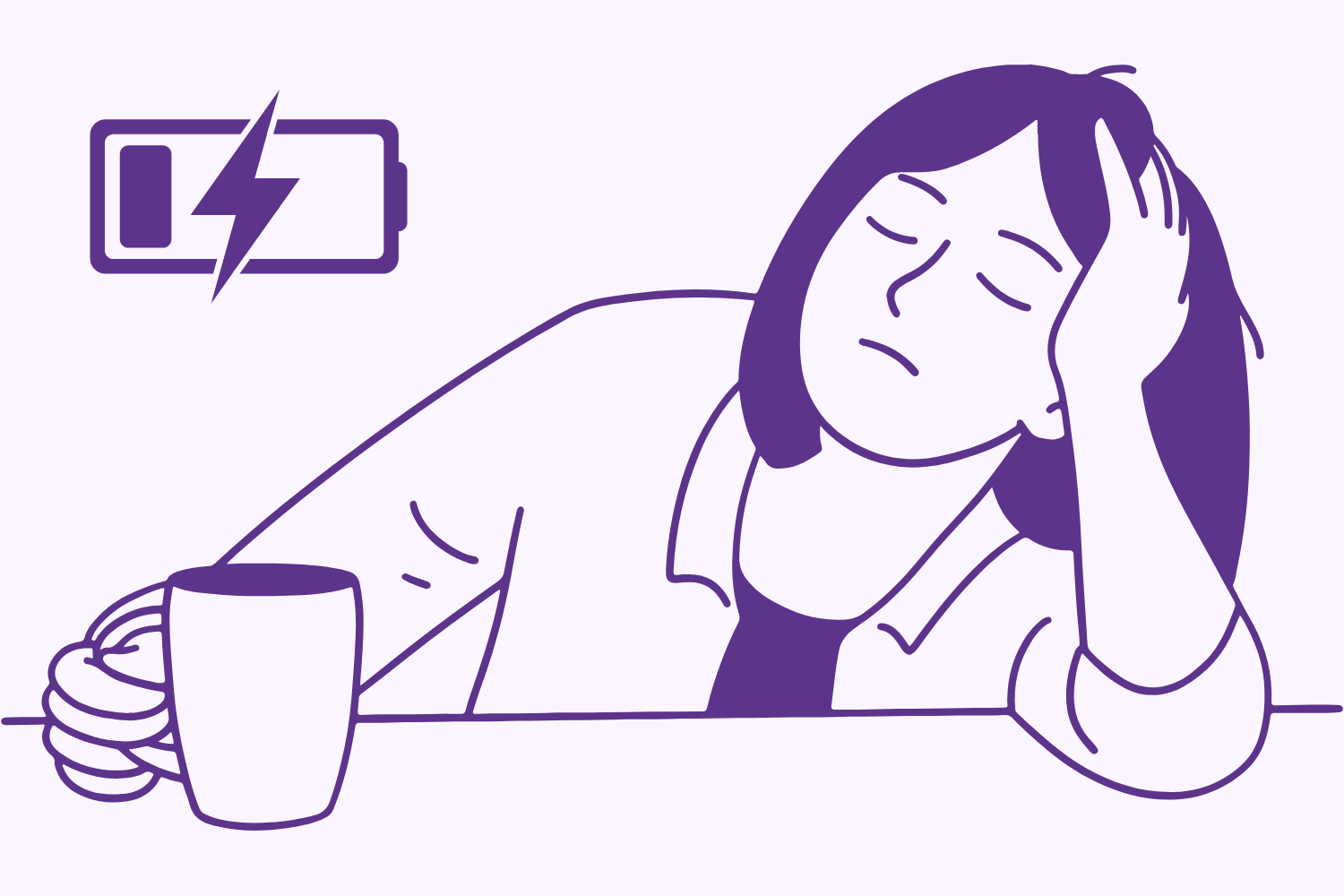
It's this leaden fatigue. An inner exhaustion that doesn't disappear - even after eight hours of sleep. A feeling like someone pulled the plug. If you often feel drained and empty during perimenopause, you are not alone. Loss of energy is one of the most common, yet least seriously taken, symptoms of this phase of life. It's time to change that.
Your basis. Daily. Simply.
Our routine is made for you - uncomplicated, quick to prepare and perfectly integrated into your daily life. Provides you daily with everything your body needs now for
Power. Focus. Balance.
- No effort
- No complexity
Just you, your energy and the good feeling of taking care of yourself.
1. Perimenopause - a hormonal web in motion
During the transitional phase before menopause, the levels of the most important hormones change drastically. And these hormones - primarily estrogen, progesterone, and testosterone - not only control the cycle but also your energy level, your mood, and your inner drive.
Estrogen
...stimulates the serotonin system in the brain. When estrogen levels drop, the nervous system loses its stability - leading to lethargy, concentration problems and emotional exhaustion.
Progesterone
...has a calming and balancing effect. It supports sleep and protects against overstimulation. If it's lacking, your system stays in permanent "on" mode - with corresponding consequences for recovery.
Testosterone
...is an energy booster that many women underestimate. Its decline manifests as exhaustion, lack of motivation, and muscular weakness.
Hormonal fluctuations not only cause hot flashes – they fundamentally influence how much energy you have available. Exhaustion during perimenopause is not uncommon.

2. Cortisol: When stress becomes chronic
Another energy thief lurks in the background: Cortisol, our stress hormone. While essential for life in the right dose, continuous stress turns it into a burden itself.
For many women, perimenopause is a time when they are particularly challenged – professionally, familialy, emotionally. If stress becomes chronic, it leads to the so-called Pregnenolone Steal: The body produces more cortisol – at the expense of producing sex hormones like estrogen or progesterone.
The result: a permanent deficiency of the hormones you so urgently need right now. And a feeling of inner exhaustion that is hard to shake off.
3. Mitochondria - your inner energy sources
You might remember from biology class: Mitochondria are the powerhouses of your cells. They convert food into energy – specifically, into ATP, the energy unit of your body. Without functioning mitochondria, you feel tired, no matter how much you sleep or eat.
The problem: Mitochondria age. And they react sensitively to hormonal changes, oxidative stress, and nutrient deficiencies – all factors that increase during perimenopause.
The good news: Mitochondria are trainable and regenerable. They primarily need:
regular exercise (especially endurance and interval training),
micronutrients such as magnesium, coenzyme Q10, and B vitamins (all included in Daylista - Embrace your BASE)
adequate protein intake
sufficient sleep and rest phases
Those who take good care of their mitochondria can literally generate new energy at the cellular level.
Support - simple and effective
Our specially developed formula combines vitamins, minerals, adaptogens, bacterial cultures and much more for your daily support. Perfectly tailored for an uncomplicated daily routine - easy to take and versatile. This all-in-one solution helps you maintain your energy and sustainably support your body, without additional effort.
- 87 ingredients
- Produced in Germany
- Study-based effectiveness
- Especially for women over 40
Clear, honest, to the point - we deliver solutions instead of empty promises.
4. Micronutrients - the invisible energy suppliers
Not infrequently, exhaustion in perimenopause is also a sign of subtle deficiencies. Particularly relevant are:
Vitamin B6 & B12: essential for nerve function and neurotransmitter formation
Vitamin D: regulates the immune system, mood, and muscle strength
Magnesium: helps with sleep problems and muscle tension
Vitamin B5 (pantothenic acid): supports the body's own hormone production
Zinc & Iron: important for oxygen transport, cell division, and mental clarity
Many of these micronutrients are chronically undersupplied due to stress, diets, or unbalanced nutrition.
5. Plant power & adaptogens – balance from nature
The targeted use of plant helpers can gently regulate hormonal imbalances:
Rhodiola Rosea (Rose Root): a classic adaptogen that improves stress resistance and reduces fatigue
Maca & Ginseng: boost energy and libido, especially with testosterone deficiency
These plants do not act like stimulants, but like a finely tuned energy module – quiet, sustainable, efficient.
Further articles on the topic


6. Lifestyle strategies: Gaining energy in everyday life
Exercise
A workout doesn't have to be a bootcamp. Even regular walks or gentle strength training activate your mitochondria, stabilize blood sugar, and lower cortisol.
Sleep & Regeneration
Maintain a consistent evening routine, avoid artificial light and digital stimuli before bedtime – your brain needs true darkness to produce melatonin.
Nutrition
Avoid blood sugar rollercoasters – instead:
Complex carbohydrates (e.g., oats, lentils)
High-quality fats (e.g., flaxseed oil, nuts)
Proteins (e.g., salmon, legumes) And: drink enough water! Even slight dehydration acts as an energy blocker.
Conclusion: Energy loss is not fate, but a signal
When your body calls for "pause," it doesn't mean weakness – but wisdom. Perimenopause is not a downward spiral, but a biological new beginning. Energy loss is a sign that your needs are changing. What you could ignore before now demands careful attention.
With the right knowledge, the appropriate nutrients, and a new way of dealing with yourself, you can tap into new sources of strength – at the cellular level, in your heart, and in everyday life.
Interested in exciting content about perimenopause in your inbox?
We believe in the power of community and exchange. Feel free to follow us on Instagram | Pinterest. Or receive emails conveniently in your inbox.
Questions & Answers about exhaustion in perimenopause
How can I distinguish whether my exhaustion is hormonally or psychologically induced?
Exhaustion often has multiple overlapping causes: Hormonal fluctuations can massively influence psychological well-being – and vice versa. Typical for hormonal exhaustion is that it occurs cyclically (e.g., in the second half of the cycle), does not improve with sleep, and is often accompanied by other symptoms: e.g., hot flashes, sleep disturbances, mood swings, or lack of libido.
A blood test (including hormone status and micronutrients) and a holistic anamnesis can provide clarity here.
I exercise regularly, eat healthily – why am I still so tired?
Regular exercise and healthy eating are a strong foundation – but in perimenopause, "healthy" is often no longer enough. Your body now has new needs: perhaps you are lacking magnesium, B12, or vitamin D – or your mitochondria are overwhelmed by oxidative stress.
In addition: too intense exercise or too few calories can rob you of energy instead of giving it to you. Listen carefully to your body's signals. Perhaps your system needs more regeneration than stimulation right now.
Can I regain my energy without hormone replacement therapy (HRT)?
Absolutely. HRT can be a blessing for some women – but it is not the only option. Many women already experience significant improvement through:
targeted micronutrient therapy,
adaptogenic botanicals,
stress-regulating measures such as yoga, breathwork, or meditation,
dietary adjustments (e.g., focus on stable blood sugar),
strength and endurance training
It is important to find individual solutions instead of blanket prescriptions. Daylista, with its all-in-one product, provides a good basis for balanced nutrient supply.
Want more information?
Blood sugar management, hormonal balance or healthy sleep - Daylista researches the most important answers about your health for you. Our 9 focus areas help you to specifically improve your well-being: pump it up, happy sleeping, no drama be queen, from the heart, under pressure, l'amour toujours, I can see clearly now, unstoppable and just the way you are. Our navigator is a resource for you. Because you know what you want - and we know how you can achieve it. Visit the navigator now.


Dr. Julia Ulbricht-Förschle
As a lawyer and mother of two children, I know how to juggle between work, family, and MeTime. In my late 40s, I feel stronger and freer than ever – because I've learned to give myself more space. With Daylista I want to encourage women to enjoy their forties and the time after with lightness, power, and the courage to seize new opportunities.