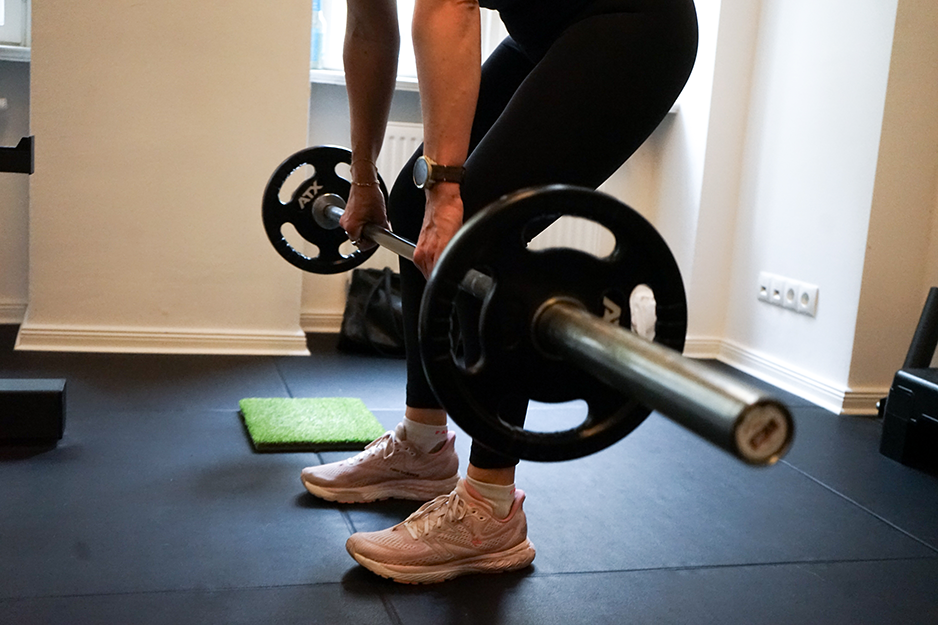
The hack: Integrate targeted strength training 2–3 times a week into your routine. Why? Because it not only promotes your heart health but also prevents osteoporosis, boosts your metabolism, slows down skin aging – and buffers the effects of estrogen deficiency during menopause.
Why you absolutely should not forego strength training
Strength training isn't a nice-to-have – it's a game-changer. Especially for women over 40.
While cardio keeps you moving, only regular strength training specifically rebuilds lost muscle mass. And that affects your health on many levels.
From around age 30, without targeted training, we lose muscle mass annually – a creeping process linked to declining estrogen levels. Estrogen is an anabolic hormone and plays a key role in muscle building - like testosterone in men.
After menopause, muscle loss accelerates dramatically: 1 to 3 percent per year!
But: You can control this. Strength training is your natural lever against this biological depletion – a true healthy-aging wonder for your heart, bones, metabolism... and even your skin.
The benefits at a glance
Strength training isn't just about your body – it's a medical all-rounder:
Heart health: More muscle = fewer deposits in the coronary arteries. Studies show: Strength training lowers blood pressure – just like endurance training!
Diabetes prevention: Women who regularly lift weights have a 30% lower risk of developing type 2 diabetes.
Bone density: Pressure & tension on the bones promote new bone formation – a powerful weapon against osteoporosis.
Metabolism booster: More muscle mass burns more calories per day – even at rest.
Beauty effect: After just six weeks of training, skin elasticity increases; it becomes smoother, thicker, and more structured.
And the best part: Even two to three strength training sessions per week reduce the risk of dying from heart disease by almost half.
Support – simple and effective
Our specially developed formula combines vitamins, minerals, adaptogens, bacterial cultures, and much more for your daily support. Perfectly tailored for an uncomplicated daily routine – easy to take and versatile. This all-in-one solution helps you maintain your energy and sustainably support your body without additional effort.
- 87 ingredients
- Produced in Germany
- Study-based efficacy
- Specifically for women over 40
Clear, honest, to the point – we deliver solutions instead of empty promises.

Personal Training at Sportsfreund
Strength training and menopause: a perfect team
During perimenopause, estrogen levels begin to fluctuate – with far-reaching consequences:
Inflammation in the body increases
Nitric oxide (important for vasodilation) is produced less
Fat distribution shifts towards the abdomen – dangerous visceral fat increases
Strength training counteracts this precisely. It reduces silent inflammation, boosts the mitochondrial engine – and gets your metabolism back on track.
Training options for every type and lifestyle
There are numerous ways to integrate strength training into your daily life – you just need to find the right method for you:
Bodyweight Training: Your body is your gym. Apps like "Pam," "Seven," or "Freeletics" provide structured workouts for every level.
Dumbbells at home: With 4–8 kg kettlebells or dumbbells, you're well-equipped. A brief introduction protects against injuries.
Gym: Variety of equipment, supervision & tailored plans. Ideal for anyone looking to start in a structured way.
Crossfit: Weightlifting meets HIIT – physically demanding, but extremely motivating. Plus: the community pushes you along.
Personal Training: Highest individualization, especially for beginners or those with health limitations. Higher costs, but maximum support and motivation.
EMS Training: Time-saving (only 20 minutes), very intense – but with a certain price tag.
How to get started right
2–3 strength training sessions per week are optimal.
Technique over intensity – especially at the beginning, pay attention to proper execution.
Recovery: Allow your muscles 48–72 hours of rest between tough sessions.
Conclusion: Strength is Freedom
Strength training is far more than just a fitness measure – it's your very personal healthy-aging program, your shield against the hormonal storms of menopause, and your key to independence in old age.
Because: Those who are strong remain self-determined!
Interested in exciting content about perimenopause in your inbox?
We believe in the power of community and exchange. Feel free to follow us on Instagram | Pintrest. Or receive emails conveniently in your inbox.
Do you want more information?
Blood sugar management, hormonal balance or healthy sleep – Daylista researches the most important answers about your health for you. Our 9 focus areas help you to specifically improve your well-being: pump it up, happy sleeping, no drama be queen, from the heart, under pressure, l'amour toujours, I can see clearly now, unstoppable and just the way you are. Our Navigator is a resource for you. Because you know what you want - and we know how you can achieve it. Visit the Navigator now.

Questions & Answers about Strength Training
How often should I train?
Two to three sessions per week are ideal. It is important to set realistic goals and stick with them regularly. Better small, consistent steps than a perfect plan you can't follow through on.
What is better: strength training or endurance training?
Both have benefits, but for women over 40, strength training is crucial because only it can counteract muscle loss. Strength training is as effective as endurance training for high blood pressure and significantly reduces the risk of heart disease. An ideal approach combines both forms of exercise.
What if I lack motivation sometimes?
Lack of motivation is normal – that's perfectly fine. It helps to schedule fixed times or train with a friend. Even short workouts (10–15 minutes) are better than nothing – often the desire returns while doing it.

Dr. Catharina Hamm
Specialist in Internal Medicine and Cardiology
As a cardiologist, I see daily how often women's heart health is underestimated – especially around menopause. I know how important it is to recognize female risks early and take symptoms seriously. That's why I want to encourage women to actively shape their heart health – with clarity, responsibility, and the knowledge that prevention is the strongest heartbeat.