Table of Contents
What if the foundation for a long, healthy, and vital life doesn't lie in your genes – but in your hormones? And what if the right time to lay this foundation isn't sometime in the future, but right now?
Longevity – the concept of healthy aging – is often associated with complicated biohacking and elaborate sports and supplement routines. But for women, it actually starts much earlier and much more subtly: with an understanding of their own hormonal system.
Longevity starts now
The word "longevity" sounds like something you save for later. For after retirement, after menopause, after a major life change. But that's a misconception – and an expensive one at that.
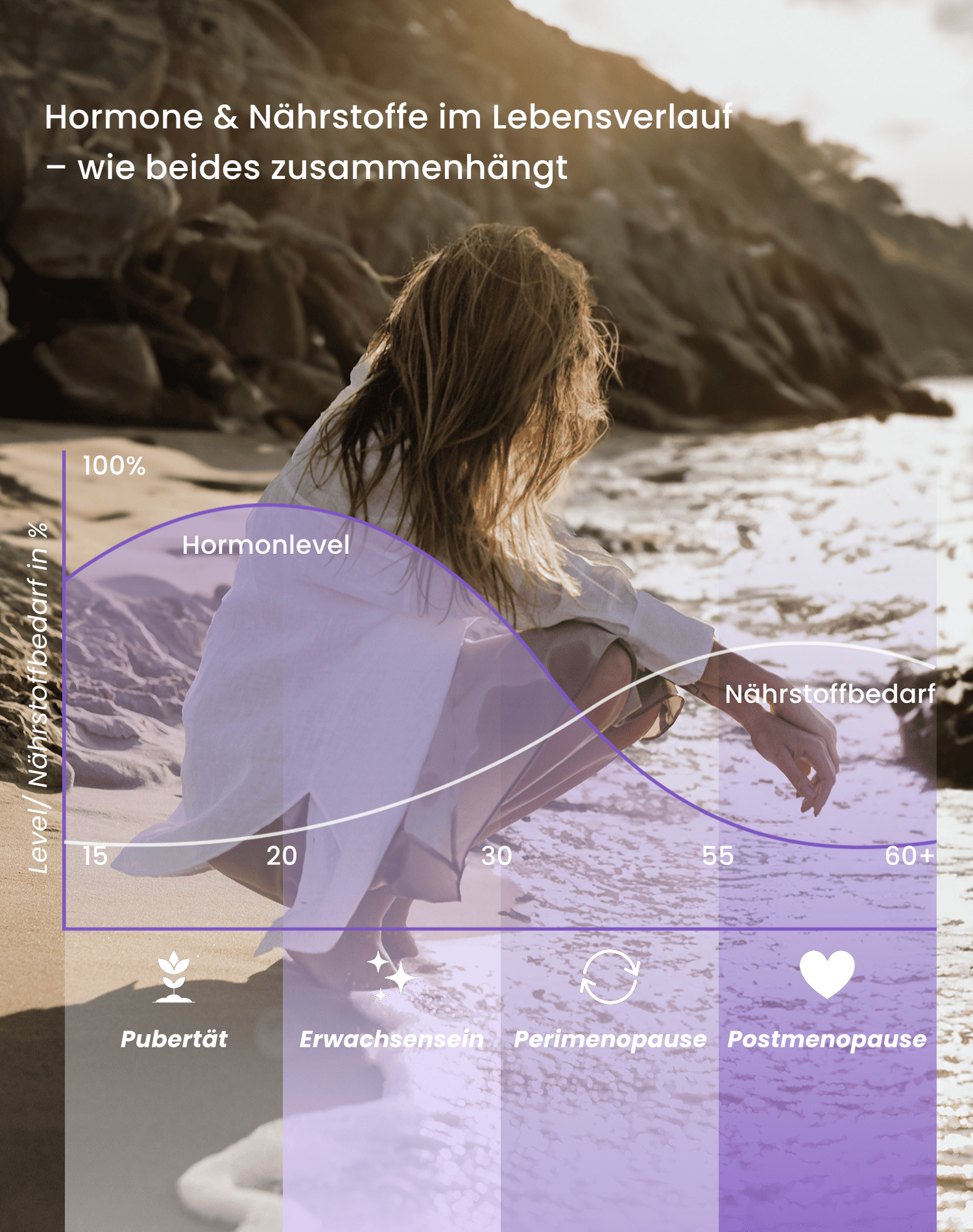
Because many of the biological processes that determine how we will live at 60, 70, or 80 years old begin in our 30s. Bone mass gradually begins to remodel from around 30 years of age. Muscle mass declines by up to one percent annually from the early 30s. Progesterone begins to decrease from the late 30s. These sound like small numbers – but they have big consequences.
Those who start contributing to their hormonal "health account" now are laying the groundwork for how fit, clear, and vibrant they will experience the coming decades. Longevity is not a sprint. It's a marathon – and those who start early run with a decisive head start.
What happens hormonally after 30 – and why it's no coincidence
The female hormonal system is a highly sensitive network. Estrogen, progesterone, cortisol, insulin, thyroid hormones – they all work together, influence each other, and react to sleep, stress, diet, and exercise. From the mid-thirties, this system begins to recalibrate.
Progesterone drops first.
As early as the late 30s, progesterone levels decrease noticeably. Progesterone is not just the "pregnancy hormone" – it has a calming effect on the nervous system, promotes deep sleep, protects nerve cells, and maintains balance with estrogen. As it drops, many women report inner restlessness, poorer sleep quality, and a feeling of being "out of sorts."Estrogen dominance gradually develops.
This doesn't necessarily mean too much estrogen – but rather that the ratio between estrogen and progesterone becomes unbalanced. Estrogens influence the absorption of glucose from the blood. With prolonged estrogen dominance, insulin levels also rise, while progesterone, as its antagonist, becomes weaker and weaker. In the long run, this can lead to creeping insulin resistance – with consequences for weight, energy, and metabolism.Cortisol as a silent amplifier.
Chronic stress increases cortisol levels – and chronically elevated cortisol fuels the same insulin resistance that is also caused by estrogen dominance. So stress is not "just" a mental issue. It directly interferes with hormonal balance and, in the long term, accelerates aging processes.Vitamin D – an underestimated steroid hormone.
What many don't know: Vitamin D is chemically not a vitamin, but a steroid hormone – related to estrogen, progesterone, and cortisol, as all arise from the same precursor substance. Vitamin D receptors are found in almost every tissue of the body. A deficiency – which is very common in Germany – therefore affects not only the bones, but the entire hormonal system.
Support – simple and effective
Our specially developed formula combines vitamins, minerals, adaptogens, bacterial cultures and much more for your daily support. Perfectly coordinated for an uncomplicated daily routine – easy to take and versatile. This all-in-one solution helps you maintain your energy and sustainably support your body, without additional effort.
- 87 ingredients
- Produced in Germany
- Study-based efficacy
- Specially for women over 40
Clear, honest, to the point – we deliver solutions instead of empty promises.
Six body areas that control your hormones
Metabolism & Weight
From the early thirties, women lose about one percent of their muscle mass annually. At the same time, body fat percentage increases – and with it, the basal metabolic rate decreases. Because fewer muscles burn fewer calories, body composition changes even without changes in diet. In addition, there is the estrogen influence on blood sugar: In estrogen dominance, adipose tissue itself produces additional estrogens – a real vicious circle that can be interrupted early with the right knowledge.
Skin
From about 30 years of age, the skin produces less collagen and hyaluronic acid. It loses elasticity, looks tired more quickly, and reacts more sensitively to external influences. This has nothing to do with poor care, but with declining hormone levels that slow down cell renewal. At the same time, micronutrients play a direct role here: Vitamin C is essential for collagen synthesis, zinc supports wound healing and cell regeneration, and omega-3 fatty acids have an anti-inflammatory effect – also in the skin.
Energy Levels & Sleep
Progesterone has a sleep-promoting, calming effect on the nervous system. With declining progesterone levels, sleep quality often suffers first. Many women report difficulty falling asleep, more frequent waking, and feeling not truly rested in the morning. The result is exhaustion that cannot be fixed with coffee. An important and often overlooked cause of low energy is also iron deficiency: Many women over 30 have depleted iron stores due to increased menstrual bleeding – often a first sign of hormonal change – without knowing it.
Muscle Mass
Muscles are not a luxury – they are the body's most important metabolic engine. Those who start incorporating strength training as a permanent component from age 30 are directly investing in their longevity. Muscles protect joints, stabilize blood sugar, support bone density, and keep the basal metabolic rate high. Adequate protein intake is also crucial for muscle building and maintenance – amino acids are the building blocks without which muscles can neither grow nor regenerate.
Bone Health
Brain & Mental Well-being
Hormones affect not only the body but also the mind. Studies show that even the size of certain brain regions – including the hippocampus, the "memory hub" – changes in parallel with estrogen fluctuations during the cycle. Progesterone directly affects the nervous system: calming, sleep-promoting, and neuroprotective. When women experiencing estrogen dominance report concentration problems or increased anxiety, it's not a weakness – it's neurobiology.
The Role of Micronutrients
Hormones need building blocks. And these building blocks come from nutrition – or not, if the supply is incomplete. This is precisely where one of the biggest and most frequently overlooked levers for hormonal health and longevity lies.
Magnesium
is involved in hundreds of enzyme reactions and plays a central role in bone and energy metabolism. Many women are latently undersupplied – especially under constant stress, which consumes magnesium.
Vitamin D
directly affects bones, the immune system, muscle function, and mood. Despite its central importance, a deficiency is very common in Germany. Only a few foods (herring, salmon, mackerel, egg yolk) provide significant amounts; self-production through sunlight is often insufficient in our latitudes.
Vitamin K2
works closely with Vitamin D: It ensures that calcium gets where it belongs – into the bones – and not into the vessel walls. Together with Vitamin D, calcium, and progesterone, it forms a true team for bone health.
B vitamins
– especially B6, B12, and folate – are essential for hormone synthesis, nerve function, and have been shown to protect against cognitive decline. Studies show that an adequate B vitamin status can help counteract neurodegenerative diseases.
Omega-3 fatty acids
are building blocks of cells – they influence the fluidity and communication ability of cell membranes, have a systemic anti-inflammatory effect and demonstrably support brain health. Regular consumption of fatty fish or targeted supplementation with EPA and DHA can slow down the aging process of the brain.
Zinc and Selenium
are trace elements directly involved in hormone production and regulation. Selenium is particularly important for the thyroid: the conversion of inactive thyroid hormone T4 into active T3 is selenium-dependent. A poorly functioning thyroid can cause fatigue, weight gain, and mood swings – symptoms often mistakenly attributed to stress.
Iron
should be regularly checked in women over 30 – especially with heavy menstrual bleeding. Iron deficiency is one of the most common, yet most overlooked, causes of fatigue, concentration problems, and hair loss.
Your daily foundation. Easily.
Our routine is made for you – uncomplicated, quick to prepare, and perfectly integrated into your daily life. Provides you daily with everything your body needs now for
Power. Focus. Balance.
- No effort
- No complexity
Just you, your energy, and the good feeling of taking care of yourself.
Lifestyle as a Longevity Foundation
Micronutrients are one part – but lifestyle is the vessel that carries everything. Longevity is not a matter of individual measures, but of a holistic lifestyle that is sustainable. Not radical prohibitions or strict plans – but small, consistent adjustments that feel good and therefore last in the long term.
-
Strength training is indispensable.
Twice a week is enough to actively counteract natural muscle loss. Muscles are not only important for appearance – they are a metabolic engine, joint protection, and bone support all in one.
-
Sleep is active health prevention.Poor sleep increases cortisol, destabilizes blood sugar, and directly interferes with hormone balance. 7 to 8 hours of restful sleep are not laziness – they are a biochemical necessity.
-
Blood sugar stability protects hormones.
Blood sugar spikes and drops due to highly processed foods and sugar boost insulin levels – and thus fuel the hormonal imbalances that naturally occur from age 30 onwards. Complex carbohydrates, healthy fats, and sufficient protein keep levels stable.
-
Stress management is hormone care.
Chronic stress is one of the biggest enemies of the female hormonal system. Not because stress is "bad" – but because cortisol displaces progesterone, disrupts sleep, and throws metabolism out of whack. Exercise, breathing exercises, breaks – all of these are not luxuries, but hormonal protective measures.
-
Know regular lab values.
What is not measured remains hidden. An annual blood test – vitamin D, iron, thyroid, B12, magnesium – is the easiest way to detect deficiencies before they become noticeable.
Conclusion: Better Aging instead of Anti-Aging
Longevity doesn't mean stopping the aging process. It's about entering each new phase of life as well as possible – with energy, clarity, and strength. This doesn't require an anti-aging mindset that fights change. It requires a better-aging understanding that comprehends and intelligently accompanies it.
And that's exactly where the hormonal system begins. Not just in menopause. Not just when symptoms appear. But now – while the course can still be easily set.
Your body is not an opponent to be defeated. It is a clever system that responds to you – provided you give it what it needs.
Interested in exciting content in your inbox?
We believe in the power of community and exchange. Feel free to follow us on Instagram | Pinterest. Or receive emails conveniently in your inbox.

Do you want more information?
Blood sugar management, hormonal balance or healthy sleep – Daylista researches the most important answers about your health for you. Our 9 focus areas help you to specifically improve your well-being: pump it up, happy sleeping, no drama be queen, from the heart, under pressure, l'amour toujours, I can see clearly now, unstoppable and just the way you are. Our Navigator is a resource for you. Because you know what you want - and we know how you can achieve it. Visit the Navigator now.

Questions & Answers
I'm in my early 30s and generally feel fit – do I really need to start thinking about my hormones now?
That's exactly the best time! Many hormonal changes begin so insidiously that they go unnoticed for a long time – muscle mass declines from the early 30s, progesterone drops from the late 30s, and bone density begins to remodel. Those who understand what's happening in their body now and take early countermeasures have the best cards for the coming decades. Longevity is not a sprint – the earlier you start, the easier it becomes.
I eat healthily – do I still need to keep an extra eye on micronutrients?
Healthy eating is a wonderful foundation – but unfortunately, no guarantee for optimal supply. Especially from the age of 30, the need for certain nutrients increases, while stress, lack of sleep, or heavier menstrual bleeding can deplete reserves. Vitamin D, for example, can hardly be absorbed sufficiently through food. And an iron deficiency often remains undetected for years because the symptoms – fatigue, concentration problems – seem so commonplace. An annual blood test provides clarity and is the easiest step to truly know how your body is doing.
What does exhaustion have to do with my hormones?
A lot – and this is often underestimated. If you constantly feel tired and drained, even though you get enough sleep, it's worth taking a closer look. Declining progesterone from the late 30s directly impairs sleep quality – you sleep, but you don't really recover. At the same time, an elevated cortisol level due to chronic stress can further unbalance the hormonal system. And let's not forget: iron deficiency is one of the most common, but most overlooked causes of exhaustion in women over 30. The good news – all of this can be measured. A targeted blood test provides clarity and shows you where you really stand.

Dr. Julia Ulbricht-Förschle
As a lawyer and mother of two children, I know how to juggle between work, family, and MeTime. In my late 40s, I feel stronger and freer than ever – because I've learned to give myself more space. With Daylista , I want to encourage women to enjoy their lives with ease, power, and the courage to seize new opportunities.