Table of Contents
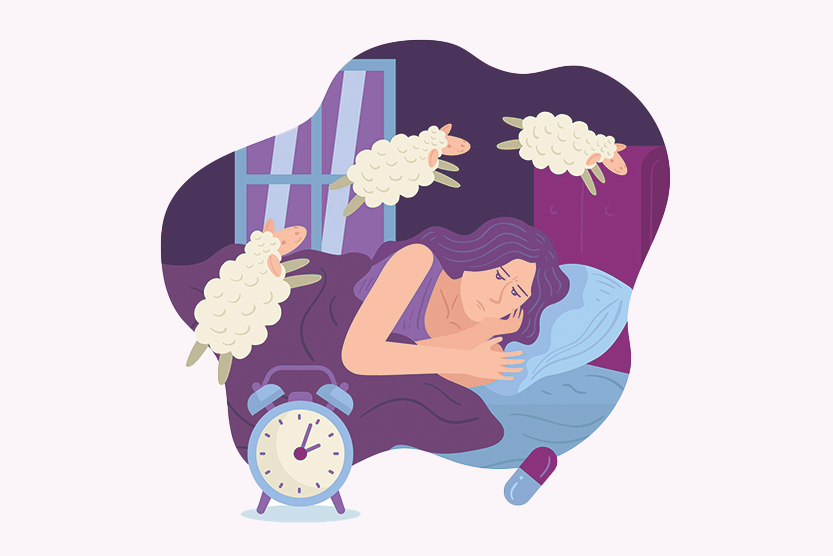
Does this sound familiar? It's 3 AM, you're wide awake in bed while your partner is sleeping peacefully next to you. During perimenopause, such nocturnal awakenings are not uncommon. The reason lies in the complex hormonal changes that occur during this phase of life.
When hormones disturb sleep – the scientific background
Progesterone – the calming sleep hormone
Estrogen – more than just a sex hormone
Support – simple and effective
Our specially developed formula combines vitamins, minerals, adaptogens, bacterial cultures and much more for your daily support. Perfectly coordinated for an uncomplicated daily routine – easy to take and versatile. This all-in-one solution helps you maintain your energy and sustainably support your body, without additional effort.
- 87 ingredients
- Produced in Germany
- Study-based effectiveness
- Specifically for women aged 40+
Clear, honest, to the point – we deliver solutions instead of empty promises.
Altered sleep architecture
Estrogen and progesterone also directly influence our REM sleep – that important phase in which body and mind recover. With their decline, the entire sleep architecture changes: deep sleep phases become shorter, while light sleep phases increase.
Hot flashes and disturbed thermoregulation

Melatonin – the key to the day-night rhythm
As we age, the body also produces less melatonin, the hormone that regulates our sleep-wake cycle. The declining estrogen levels in perimenopause can further exacerbate this natural decline and thus additionally contribute to sleep disturbances.
The consequences of disturbed sleep are noticeable: You feel tired during the day, are more irritable, and struggle with concentration problems. Difficulty falling asleep or waking up early in the morning without being able to fall back asleep are typical. Many women also report night sweats, heart palpitations, or sudden feelings of anxiety, which further disturb sleep.
More than just fatigue – when sleep deprivation becomes a health risk
Chronic sleep disorders are more than just annoying – they can have serious health consequences. The risk of the following diseases increases:
Obesity
Cardiovascular diseases
Diabetes
Depression
It is therefore worthwhile to take sleep problems seriously and address them actively to minimize long-term health risks.
More than just hormones – other sleep disruptors during menopause
Menopause often coincides with significant life changes: children move out, career reorientations are pending, or caring for one's own parents becomes necessary. These changes can cause additional stress, which affects sleep. A vicious circle arises: hormonal fluctuations increase stress sensitivity, while stress in turn disrupts the hormonal balance.
The risk of sleep-related breathing disorders such as sleep apnea also increases during menopause. The decline in estrogen and progesterone can impair breathing regulation during sleep, leading to short pauses in breathing and thus frequent nocturnal awakenings – often without the affected person being aware of it.
When to see a doctor
If you are unsure whether there might be more to your sleep problems, or if your previous attempts have not brought any improvement, a doctor's visit is advisable. It is important to rule out medical causes such as sleep apnea (breathing pauses), thyroid problems or other illnesses. Certain medications can also cause sleep problems as a side effect and should be adjusted if necessary.
A doctor can also help to analyze the exact pattern of your sleep disturbances and find individually suitable treatment options. For persistent or particularly distressing sleep problems, professional support is always useful – it can save you unnecessary detours and help more targeted.
Natural sleep aids – ways to better sleep without medication
Optimize your bedroom
A cool, well-ventilated bedroom can work wonders. The ideal room temperature is between 16 and 18 degrees Celsius. Light cotton bedding promotes sleep by allowing the body to breathe and reducing sweating. Also make sure that the room is sufficiently darkened and avoid bright or bluish light before going to bed.
Pay attention to your evening diet
What's on your plate also affects your sleep. Avoid caffeine and sugar in the evening – they can significantly disrupt sleep. And unfortunately, that also applies to alcohol. While alcohol initially has a relaxing effect and can facilitate falling asleep, it has negative effects on sleep quality. A diet rich in vitamin E, for example through nuts, seeds or green leafy vegetables, can, however, be supportive and contribute to relaxation.
Utilize daylight
Regular exposure to daylight is important for our sleep-wake rhythm. It promotes the production of melatonin, which makes us tired in the evening. A morning walk can stabilize your internal clock and make it easier to fall asleep in the evening.
Establish a sleep routine
Our body loves regularity. A consistent bedtime and calming evening routines signal to your body: "It's time to switch off." Whether it's a warm bath, a cup of herbal tea, or ten minutes of reading – find your personal sleep ritual. Avoiding a midday nap can also improve nighttime sleep.
Practice calming breathing techniques
Deep, slow breathing can activate the parasympathetic nervous system and significantly improve sleep quality. Try to breathe consciously for a few minutes before falling asleep: Count to four while inhaling, hold your breath briefly, and then slowly exhale while counting to six. This simple technique has been shown to reduce stress hormones and optimally prepare the body for the night.
Reduce blue light in the evening
Electronic devices such as smartphones, tablets, and computers emit blue light, which can suppress the production of the sleep hormone melatonin. You should avoid these devices an hour before bedtime. If that is not possible, you can use blue light filters or special apps that reduce the blue light component. Dimming the lighting in the house in the evening hours can also signal to your body that it is time to prepare for sleep mode.
The green pharmacy for better sleep
Nature offers effective helpers for sleep problems. There is a variety of herbal remedies with hops, lemon balm or valerian. These natural remedies gently promote relaxation and can improve sleep. They are available without a prescription and usually have fewer side effects than synthetic sleeping pills.
Melatonin as a sleep aid
When natural remedies are not enough: Medicinal options
Your Basis. Daily. Simply.
Our routine is made for you – uncomplicated, quick to prepare, and perfectly integrated into your daily life. Provides you daily with everything your body needs now for
Power. Focus. Balance.
- No effort
- No complexity
Just you, your energy, and the good feeling of taking care of yourself.
Sleeping pills – to be used with caution
For persistent sleep problems, sleeping pills can provide short-term relief. But caution is advised. Many of these preparations can be addictive and have side effects:
Daytime drowsiness that impairs your reaction time
Increased risk of falls, especially in older people
Cognitive impairments that affect concentration and memory
These medications should therefore only be taken under medical supervision and for a limited time.
Antidepressants – more than mood enhancers
Low-dose antidepressants can be an alternative. They not only help with sleep disorders but can also alleviate accompanying symptoms such as anxiety and inner restlessness. Some can even reduce hot flashes. However, antidepressants should only be taken after medical consultation and under continuous medical supervision.
Hormone replacement therapy: Targeted help for hormonally induced sleep disorders
If hormone fluctuations are the main cause of your sleep problems, hormone replacement therapy (HRT) can be useful. Modern HRT today primarily uses bioidentical hormones that correspond exactly to the body's own hormones in their chemical structure. This allows for a more natural effect in the body and can reduce the risk of side effects.
In contrast to earlier, hormone therapy is now usually administered transdermally – i.e., through the skin. This modern form of application has decisive advantages: It burdens the circulatory system significantly less and, in healthy women, is not associated with an increased risk of high blood pressure, stroke, thrombosis, or pulmonary embolism. Even for women with blood clotting disorders, the transdermal method is often well tolerated because it hardly affects clotting.
A well-adjusted HRT can promote REM sleep again and thus ensure better nocturnal recovery. The result is more restful nights and an increased quality of life during the day. It is important to understand, however, that HRT is not a one-size-fits-all solution. It should always be individually adjusted and discussed in detail with a doctor. Only in this way can risks and benefits be carefully weighed and the appropriate therapy for you be found.
Conclusion: Individual paths to restful sleep
The path to better sleep during menopause is as individual as you are. Which measures are best suited for you depends on the type and intensity of your symptoms. For milder sleep problems, natural methods and improved sleep hygiene may be sufficient. For more severe symptoms, it is sometimes advisable to talk directly with your doctor about medicinal options or hormone replacement therapy.
There is no "standard path" - it is important that you find the right support for you. With the right approach and some patience, you can find your way back to restful nights and better manage the challenges of perimenopause.
Want exciting content about perimenopause in your inbox?
We believe in the power of community and exchange. Follow us on Instagram | Pinterest . Or receive the emails conveniently in your inbox.
Would you like more information?
Blood sugar management, hormonal balance or healthy sleep – Daylista researches the most important answers about your health for you. Our 9 focus areas help you to specifically improve your well-being: pump it up, happy sleeping, no drama be queen, from the heart, under pressure, l'amour toujours, I can see clearly now, unstoppable and just the way you are. Our navigator is a resource for you. Because you know what you want - and we know how to achieve it. Visit the navigator now.

Questions & Answers about Sleep during Menopause
How long do typical perimenopausal sleep disturbances last?
Sleep problems can occur with varying intensity throughout perimenopause (4-8 years). For about half of women, sleep significantly improves after menopause.
How do electronic devices affect sleep during perimenopause?
The blue light from smartphones and tablets can inhibit melatonin production and worsen sleep problems. Avoid screens at least one hour before bedtime or use blue light filters.
Does hormone replacement therapy always help with sleep disorders?
Hormone replacement therapy can be very effective for hormonally induced sleep problems, but it does not work equally well for everyone. The benefits and risks should be individually weighed with your doctor.

Marianna Papagallo Dörnemann
Gynecologist
As a gynecologist, I have accompanied women for many years through the hormonal changes of perimenopause and menopause. I know how individual this phase of life is – and how much quality of life we can gain when we approach it with knowledge and openness.