The microbiome is more than just a collection of bacteria – it's a highly active ecosystem that communicates with your immune system, your hormones, your bloodstream, and even your brain. The oral cavity and the gut play a central role in this. A healthy microbiome not only ensures strong teeth and healthy gums, but also efficient digestion, a healthy cardiovascular system, a stable hormonal system, and even your mental balance. Learn how closely oral and gut flora are connected and what you can do to strengthen them specifically – especially during the hormonal transition of perimenopause.
Why the microbiome is so important
Your body contains more microbes than body cells. More precisely: about 39 trillion bacteria – most of them in the gut, but also in the oral cavity. These small co-inhabitants not only regulate digestion but also influence your hormones, immune system, bone health, and even your mood.
A balanced microbiome can, among other things:
Displace harmful germs
Reduce inflammation
Break down and recycle estrogens (via the so-called Estrobolome)
Produce neurotransmitters like serotonin, which are crucial for well-being and sleep
The microbiome is therefore not a supporting actor – it plays a leading role in your health.
The connection between oral and gut flora
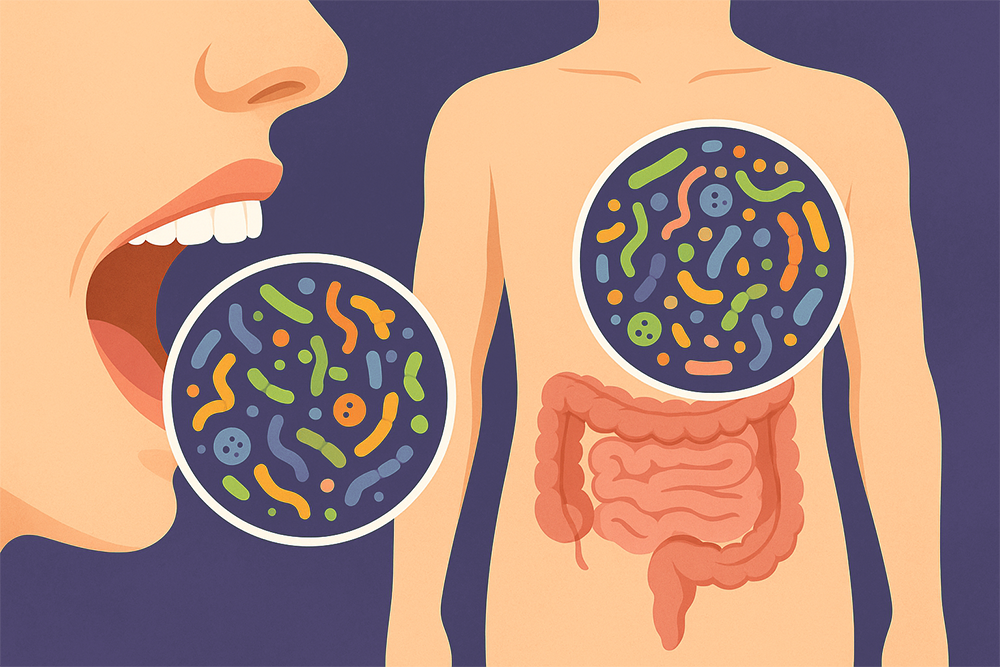
The oral cavity is the first station of digestion – and often an overlooked factor when it comes to systemic health. Yet, the path from the tongue to the gut is more direct than one might think.
Bacterial migration: Harmful germs from the mouth can reach the gut when swallowed and disrupt the delicate balance of the gut flora there.
Inflammation: An inflamed oral mucosa or gum inflammation (e.g., periodontitis) promotes systemic inflammatory reactions that affect the entire body.
pH value: A too low salivary flow (e.g., due to hormonal changes) alters the pH value in the mouth – which in turn affects both tooth and gut health.
Immune system: 70% of our immune system resides in the gut. But the first contact with pathogens occurs in the mouth – it is often there that it is decided whether your body can react effectively.
Support – simple and effective
Our specially developed formula combines vitamins, minerals, adaptogens, bacterial cultures, and much more for your daily support. Perfectly coordinated for an uncomplicated daily routine – easy to take and versatile. This all-in-one solution helps you maintain your energy and sustainably support your body, without additional effort.
- 87 Ingredients
- Produced in Germany
- Study-based efficacy
- Especially for women over 40
Clear, honest, to the point – we deliver solutions instead of empty promises.
Consequences of a disturbed microbiome
If the microbiome is out of balance – due to stress, an unbalanced diet, antibiotics, or hormonal fluctuations – this can have diverse consequences.
In the oral cavity
Gum inflammation (gingivitis, periodontitis, and jawbone recession)
Cavities despite good oral hygiene
Bad breath
Dry mouth
In the gut
Bloating, irritable bowel, constipation
Leaky gut syndrome (permeable intestinal wall)
Disorders in nutrient absorption (e.g., vitamin B12, magnesium)
Tendency to inflammation
Systemic
Mood swings, brain fog, depressive moods
Weight gain despite unchanged eating habits
Sleep disorders and exhaustion
Weak immune system and susceptibility to infection
Hormonal imbalance due to disturbed estrogen breakdown
Microbiome and Perimenopause
The hormonal changes in perimenopause directly affect the microbiome – and vice versa.
Less estrogen = less bacterial diversity: Studies show that declining estrogen levels lead to reduced diversity of the gut flora.
Estrobolome disturbed: The Estrobolome – a special group of gut bacteria – is responsible for the breakdown and recycling of estrogen. If this function is disturbed, it can lead to hormonal imbalance.
Digestion slows down: Progesterone regulates bowel movements. When it decreases, constipation, bloating, or flatulence can occur.
Oral flora changing: Reduced saliva production increases the risk of gum disease and cavities – both of which exacerbate systemic inflammation.
The brain is also affected: An imbalance in the gut can disrupt the production of serotonin and GABA (gamma-aminobutyric acid), both mood-lifting neurotransmitters – which promotes depressive moods. The already increased susceptibility to mood swings, sleep problems, or anxiety during perimenopause can be exacerbated by a disturbed microbiome.

How you can naturally strengthen your microbiome
The good news: Your microbiome is amazingly adaptable. It reacts quickly – sometimes within a few days – to what you eat, how you live, and how you feel. So you can actively influence it. And it's worth it.
Adjust your diet
Your microbiome needs fiber, variety, and living food. Plant-based foods such as lentils, oat bran, flax seeds, and colorful vegetables are particularly good for it. Prebiotic foods like chicory, onions, asparagus, or bananas nourish the "good" bacteria, while probiotic sources like yogurt with live cultures, kefir, kimchi, or raw sauerkraut provide fresh supplies. Bitter substances – such as in arugula or artichoke – are also real boosters for digestion and liver function.
Reduce sugar and white flour
Too much sugar – and also some artificial sweeteners – promote the growth of unfavorable germs in the gut and disrupt the balance. White flour products have a similar effect and tend to nourish the "wrong" bacteria. Therefore, focus on natural, whole foods – your gut will thank you.
Gut-friendly supplements
Sometimes your gut also needs targeted support. Especially during hormonally demanding phases like perimenopause, it can be useful to work with nutritional supplements and bacterial cultures.
Reduce stress
Chronic stress demonstrably alters the composition of your gut flora. Breathing techniques, yoga, short meditations, or simply regular, good sleep – preferably with a closed mouth. All of this strengthens the so-called gut-brain axis. Even ten minutes a day can make a difference here.
Proper oral hygiene
A healthy oral flora is the first step for a healthy microbiome. Mild, alcohol-free oral care products, daily cleaning of teeth, tongue and interdental spaces, as well as regular dental visits and professional teeth cleaning help prevent inflammation that could otherwise affect the whole body. And don't forget – drink enough water to promote saliva production and flush out harmful bacteria.
Your Basis. Daily. Simply.
Our routine is made for you – uncomplicated, quick to prepare, and perfectly integrated into your daily life. Provides you daily with everything your body needs now for
Power. Focus. Balance.
- No effort
- No complexity
Just you, your energy and the good feeling of taking care of yourself.
Conclusion: Your health begins in your mouth
The microbiome is an underestimated but crucial factor for your health – especially during perimenopause. Oral and gut flora are closely connected and influence your hormone system, digestion, mood, and even your sleep.
Women aged approximately 40 and over who are experiencing hormonal changes should pay special attention to their microbiome. With a targeted diet, conscious care, and a mindful lifestyle, you can actively contribute to regaining your balance – from the inside out.
Because: Your gut knows more than you think.
Curious about exciting content on perimenopause in your inbox?
We believe in the power of community and exchange. Feel free to follow us on Instagram | Pinterest . Or receive emails conveniently in your inbox.
Do you want more information?
Blood sugar management, hormonal balance or healthy sleep – Daylista researches the most important answers about your health for you. Our 9 focus areas help you to specifically improve your well-being: pump it up, happy sleeping, no drama be queen, from the heart, under pressure, l'amour toujours, I can see clearly now, unstoppable and just the way you are. Our navigator is a resource for you. Because you know what you want - and we know how you achieve it. Visit the Navigator now.

Questions & Answers
What does my hormone balance have to do with my gut?
More than you think. The gut is actively involved in the utilization and breakdown of estrogens – via the so-called Estrobolome. If the microbiome gets out of balance, this can disrupt estrogen levels and thus your hormonal balance. Especially in perimenopause, this is a sensitive cycle.
Why do I need to consider my dental health?
The oral cavity is the gateway to the microbiome. Inflammation in the mouth can burden the entire body and disturb the balance of good bacteria in favor of bad bacteria in the gut. Mild, regular, and thorough oral hygiene, as well as regular professional teeth cleaning, are more important than ever during perimenopause – especially with dry oral mucosa or gum problems.
How do I know if my gut microbiome is out of balance?
A "disturbed microbiome" does not always show itself immediately, but typical signs are: frequent digestive problems, constant fatigue, skin impurities, susceptibility to infection, or mood swings. Sugar cravings or sudden weight gain can also be indicators. Listen to your gut feeling – literally.

Hanna Ebert
As an environmental dentist, I view my patients holistically and see daily how closely oral health is connected to overall well-being. With Daylista, I want to encourage women to actively strengthen their health in all aspects – with the right prevention, a conscious diet, and an eye on the big picture.